Robert Wright Artist

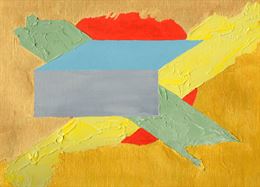
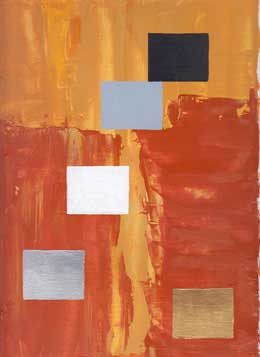
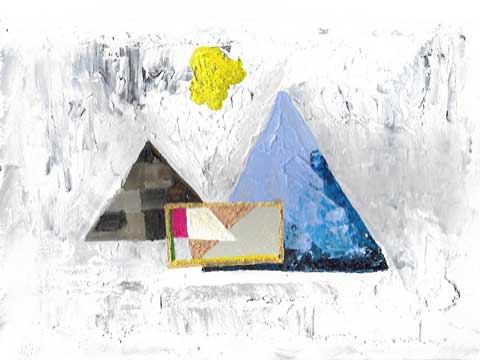
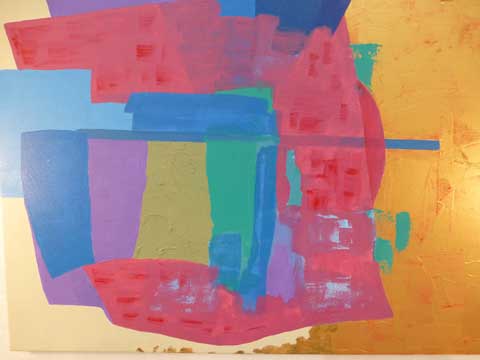
The Other Side of Silence - 2009
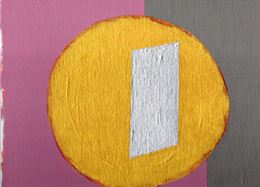
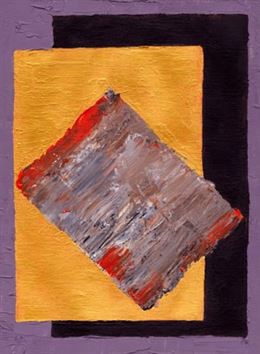
The Advancing Edge - 2007
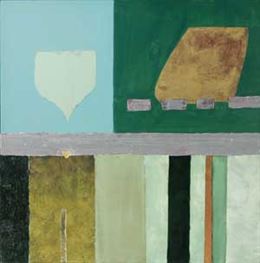
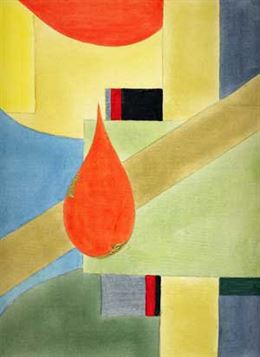
hArt - 2007
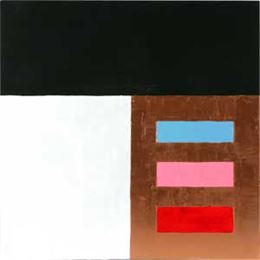
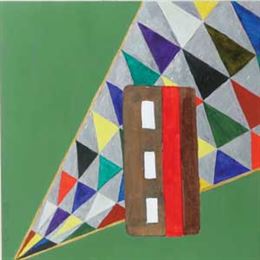
The Enterprise - 2004

The Other Side of Silence at Westminster Abbey's Cheyneygates
The Priest Painter, Canon Robert Wright, one of London's busiest Anglican clergymen exhibited 30 of his powerful iconic and spiritual paintings in a new exhibition entitled The Other Side of Silence at Westminster Abbey's Cheyneygates .By faith Abraham went out
Canon Wright is the Sub-Dean and Canon of Westminster Abbey, the Rector of St Margaret’s Church (in the lee of the Abbey) as well as the Speaker's Chaplain in the House of Commons dealing with MPs and acting as chaplain to 14,000 pass holders and working with people of other faiths in the Palace of Westminster.
Self-taught, Robert Wright has been painting and selling his work seriously since 1998 yet there is a steady demand for his pictures which cost between £250 and £1500.
The theme of the present exhibition is The Other Side of Silence. Robert Wright explains, ‘I am trying to explore some of the deep things in life which we find when we get besieged and under pressure. In my paintings I want to get beyond symbolism to approach people's deeper feelings such as joy, sadness, energy, a sense of possibility and perhaps most of all, stillness. I have been greatly influenced by the work of the American monk, Thomas Merton, for example one of his remarkably thought provoking sentences, ”Our real journey in life is interior.”
‘I always aim to have my paintings reflect this. Painting is an extraordinarily valuable medium which helps us to understand what it is to be human.’
Over the years Robert Wright has developed a considerable interest in interfaith projects and a number of his pictures have found their way into premises of other religions. Mark Winer, Senior Rabbi of the West London Synagogue has commented, ‘The art of Robert Wright reflects the spirituality and sensitivity of a uniquely modern yet deeply traditional man.’ The American writer, poet and theologian, Bonnie Thurston, says: ‘Robert Wright’s profound and powerful paintings speak to our complex modern society.’
back to top

The Advancing Edge - 2007 following an exhibition held in Hereford earlier in 2007 as part of hArt 2007 The Advancing Edge was Robert Wright's third solo London exhibition.I silence am thy Amen
The Medieval mystic, Meister Eckhart, once said that, "to touch our creativity is to touch our divinity". We tend to think of "real" theology as being only language-based but in reality many of us meet God in our senses before meeting him in words — think of the thrill of a glorious sunset, or one of the many tragedies we see in the news. Of course, we may not meet God there, and many people never do! But when St John of the Cross said, "God created the arts in order that life might be held together by them, so that we should not separate ourselves from spiritual things", he was reminding us of truth that Robert Wright also seeks to explore in these intense, intimate paintings, because he believes that there is more to being human than language can explain. Robert hopes that there can be some sort of coming together of mystery and illumination in these paintings: that we can understand something of what St Paul prays for in the Letter to the Ephesians (1.18): "May God enlighten the eyes of your heart…”.
Kandinsky believed that painting, like music, should be expressive of the artist's "inner life", the deepest intuitions and feelings, without recourse to "reproduction of natural phenomena". So, he said, "one should not approach art by means of reasoning and understanding, but through the soul, through experience". For Robert, the "edge" can be a sharp, critical point of illumination and the title the advancing edge suggests an immanent insight, but even here is ambiguity, for it could also mean a gradual, deepening, growing insight.
Usually bright and colourful, these paintings radiate both calm and composure and whilst some may find them too precise they do speak of harmony and order as Robert explores both the inner life and the paint medium itself. In a way, it is ironic to use the visual to describe spiritual matters of the heart, but because the paintings do not seek to represent any particular object they can, given attentiveness, represent something "other" and it is to be hoped that the paintings are "large" enough to reflect whatever you, the viewer, bring to them. This exploration invites us to use a language that perhaps we are not too familiar with but because Robert has great sympathy with Mark Rothko's dictum that "a painting lives by conversation" he is always interested in the viewer's point of view or interpretation, as we approach the advancing edge. A Robert Wright Westminster. December 2007
back to top

hArt - 2007
In 2007, Robert Wright divided his time between Woonton, near Kington, and London where he is Sub- Dean of Westminster, Rector of St Margaret’s and  Speaker’s Chaplain.
He seeks to explore the mysteries of the heart through abstract art. This might seem to be paradoxical but the English mystics use rich symbolism and imagery to point to things that they tell us are beyond words. And it is that place beyond words that Robert Wright seeks. Normally using acrylics, his abstract paintings are not intended to be remote; they seek to comment on the inner life and to help the viewer get a direct feeling about spirituality in relation to the painting they are looking at.
Robert was especially pleased to be exhibiting as part of h-Art, having previously held two solo exhibitions in London.

Canon Robert Wright
back to top

2004 - The Enterprise: “ An undertaking, especially one which involves courage, energy or the like; an important or daring project : a venture.” –Webster’s Dictionary
Welcome to my second exhibition. I am enormously grateful to Mr Speaker, the Dean and Chapter of Westminster, and all my Colleagues for giving me this opportunity and for encouraging me to paint. David Hockney recently quoted an ancient Chinese saying: a work of art needs three things: the hand, the eye and the heart. Come shyly to the main questionI hope I have managed to bring these three together and that you will be able to enter into a relationship with at least some of my paintings. Mark Rothko often said that a painting lives by companionship and I think that is a very perceptive remark. I would like to know what you think when you have viewed them. As I have started, I might as well continue with the name-dropping and say that Archbishop Rowan Williams has written that good art “works to make present an aesthetic object that allows itself to be contemplated from perspectives… other than those of the artist’s own subjectivity.” Will you come with me to “where elephants swim and lambs paddle”?
During my Sabbatical I tried to explore contemplative prayer and abstract painting. In setting out to do this I realised that not everyone is called to contemplative prayer and neither does everyone appreciate abstract painting. However I do not think that is reason for us not trying to communicate and I really do hope that my painting will encourage people in their own exploration of God. My own exploration comes out of the writings of the anonymous author of the 14th Century Cloud of Unknowing. The Cloud calls for intense contemplation, motivated by love and stripped of all thought, as the way to the Divine. But not everyone is called to mysticism (I wouldn't even claim this vocation for myself: I wander in the foothills). However I do hope that the paintings will help the viewer enter the heart of the mystical experience themselves and that the exhibition will allow us all to open ourselves to God's gracious presence because contemplative prayer is not a personal possession that one treasures for oneself: if it is genuine, it displays the essential quality of “goodness”: that is, it wishes to share the blessing with others. And I hope that this little enterprise will encourage all who visit it to open their inner door to God and perhaps, for a while, be free for God.
It has been said (by David Carbone) that “painters naturally live by seeing; painting is a way of knowing what one feels, what really matters”. As Mark Rothko said in a letter to the writer Selden Rodman in 1957, “The people who weep before my paintings are having the same religious experience I had when I painted them”. I don’t suppose that my paintings will make you cry, but part of the excitement for me is that we shall all bring our own experiences to this encounter/ trialogue between the painter, the viewer and our Creator. Whatever my intentions were in painting each painting, the viewer will bring their own experiences "to the party" and the painting will come alive in the present, changed somewhat by the circumstances and perceptions of those who view the paintings. The uncertainty principle in modern Quantum Physics maintains that we cannot know precisely what is happening to matter in the sub-atomic world precisely because we influence what is happening by our observation — we are part of what we see. As Thomas Merton noted in his journal: “This leads to a fabulous new concept in nature with ourselves in the midst of it, destroying the simple illusion of ourselves as detached and infallible observers.” What an exciting encounter this promises, then! And perhaps, in the mixed metaphor of a writer in the Middle Ages, you will swim with elephants and paddle with lambs!
These paintings attempt to appeal to something in our experience that lies beyond words, perhaps allowing/inviting us to “see” that there are things in our experience that words cannot encompass. One of the experiences that helped me prepare for this sabbatical was a remarkable lecture given at Westminster School by Dr Semir Zeki, Professor of Neurobiology at London University. In one of his books he quotes Nuam Gabo, “More often than not, (people) expect painting to speak to them in terms other than visual, preferably in words, whereas when a painting needs to be supplemented and explained by words it means that it has not fulfilled its function or that the public is deprived of vision.” [N Gabo Of Divers Arts 1959 & S Zeki Inner Vision 1999]. Discussing the function of the brain and art, Dr Zeki says that our visual skills have long been honed to recognise “unspeakable beauty” in an instant, whereas language, a comparatively recent evolutionary skill, has not yet developed the speed and efficiency of the visual system’s capacity to grasp essentials.
But enough of words! …these halting but highly suggestive paintings… are offered in the hope that those who look at them will find perceptions which are provocative, interesting, enjoyable, transfiguring, redemptive and energising.

back to top
home
biography
gallery
exhibitions
contact

Picture framing undertaken by Richard Christie Framemaker Unit 6 Weston Industrial Estate, Honeybourne, Worcestershire, WR11 7QB
Tel: 01386 841177 Opening hours: 9am to 5.30pm but please telephone first. Email: artgiano@hotmail.com